
Don't wait until
the damage is done.
Professional termite inspections and treatments across Adelaide - before costly repairs are needed. CSIRO research says 1 in 3 Australian homes will be attacked by termites. The average repair bill is around $10,000, and severe cases run over $100,000.
Inspected
Recommended
Licensed
Termite damage
is never covered.
Every standard Australian home and contents insurance policy specifically excludes termite damage. This isn't a fine-print trick - it's the industry-wide position, and even major insurers like ANZ & CGU state it openly. The cost of repair falls entirely on the homeowner.
Considered "Gradual Damage"
Insurance covers sudden, accidental events. Termite damage develops slowly across months or years, so it falls under standard "gradual damage" exclusions.
Classed As "Preventable"
Insurers consider termite damage preventable through regular inspections and proper maintenance - making it your responsibility, not theirs.
Total Vermin Exclusion
All policies covering commercial or domestic property have a total vermin and insects exclusion. No "added cover" option will change that.
Mass Payouts = Collapse
With 1 in 3 homes affected, covering termite damage would trigger nationwide claims and collapse the insurance system. Premiums would become unaffordable.
Although you might think of termite damage as a natural event, most insurers, including CGU (the underwriter of ANZ Home Insurance), don't provide cover for termite damage. The best thing you can do is make sure the damage doesn't occur in the first place.- ANZ Home Insurance (Public Statement)
What you'd actually pay out of pocket.
Real-world termite damage repair costs in Australia - none of it claimable on insurance.
Termites in your suburb.
Heatmapped.
Termite risk in South Australia isn't uniform. The Riverland, Adelaide Hills foothills, and Murray River corridor are the hottest zones - driven by moisture, temperature and vegetation. Metro Adelaide sits in the moderate-to-high band, with most suburbs registering significant termite activity.
The honest answer to "are termites a problem in my suburb?" is almost always yes. Murray's has been mapping infestations across SA since 1959.
The data they don't put
in the insurance ads.
Verified figures on Australian termite damage - CSIRO, Archicentre, and industry data. None of which insurance will reimburse you for.
If you're paying $0 either way, get the one that actually protects your home.
Free quote for termite management systems · No obligation.
Three species. One terrifying reality.
South Australia is home to a handful of structural-timber termite species. Each behaves differently - but every one of them can quietly destroy an Adelaide home.
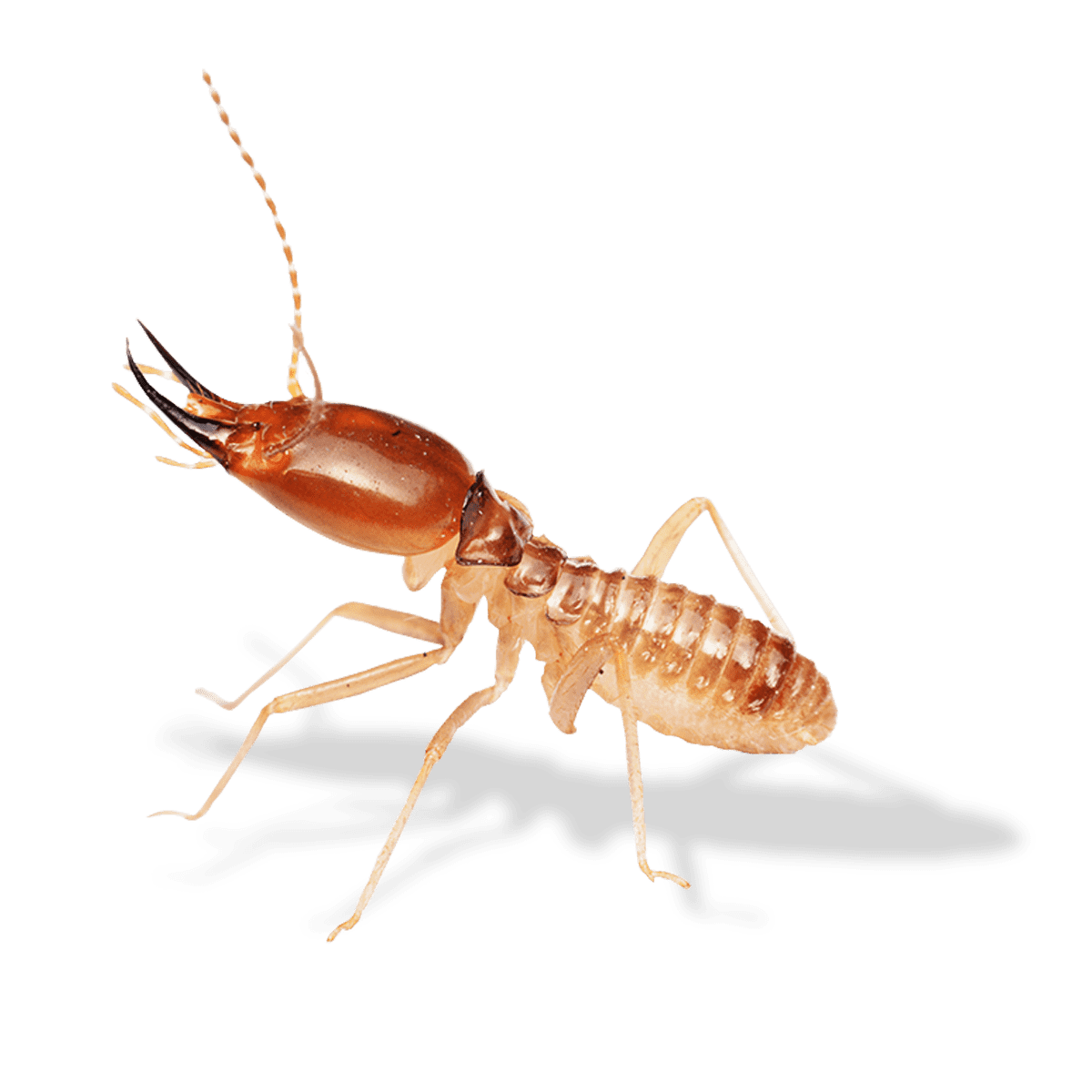
Small enough to go unnoticed. Numerous enough to destroy your home.
An adult subterranean termite worker is around 3–4mm long - about half the size of a grain of rice. They're pale, soft-bodied, and built for the dark. You won't see them out in the open. By the time you notice the damage, the colony beneath your home has been feeding for months.
The Subterranean Wrecker
Responsible for the majority of structural timber damage to Australian homes. Builds enormous underground colonies - sometimes more than a million individuals - and aggressively forages for cellulose, including the structural timber inside your walls and roof.
The Damp-Wood Pest
Smaller colonies than Coptotermes - but no less destructive once established. Particularly drawn to moisture-affected timber. Common in homes with leaking taps, poor drainage, or wood-to-soil contact.
The Local Forager
Common across South Australia and frequently encountered in weathered or weather-exposed timber - fence posts, decks, pergolas, retaining walls. Often the species discovered first because its damage shows up outdoors before it migrates indoors.
Underground. Invisible. Devastating.
Termites are blind, secretive, and never expose themselves to light. By the time you see surface damage, the colony beneath has typically been feeding on your home for months - sometimes years.
A mature subterranean colony can house over a million individuals, fanning out from a central nest through earthen tunnels that can reach 50 metres or more from the source. Your home is just one foraging target on a much wider network.

Six signs of termite activity.
Termites are secretive by nature - most damage happens before you even notice them. These are the tell-tale signs Murray's technicians look for.
Mud "Shelter Tubes"
Brown mud tubes - sometimes resembling coffee grounds - on walls, foundations, or piers. These are termite highways from the soil to your timber.
Sagging Floors or Doors
Doors that suddenly stick. Floors that feel spongy or dip. Window frames that jam. All can signal termite damage to internal timber.
Brown Lines in Gyprock
Faint horizontal brown discolouration lines appearing on internal walls - moisture and termite activity tracking behind the plaster.
Cracked Paint or Plaster
Unexplained hairline cracks in paint or plaster as timber behind it loses structural integrity. Often dismissed as "house settling."
Power Failures
Termites are attracted to the warmth of electrical fittings and can chew through cable insulation. Unexplained power issues warrant a check.
Flying "Alates"
Flying ants - termite alates - typically swarm in Oct–Nov on humid days. They're the colony's reproductives starting a new nest. Yours or your neighbour's.
Does your home
have any of these termite magnets?
Each item below is a conducive condition - something that attracts termites or makes your property easier for them to enter. The more of these you recognise around your home, the more urgent an inspection becomes.
Moisture or leaks near foundations
Leaking taps, broken pipes, hot water service overflow, or air-con condensate creating consistent damp around the slab perimeter.
Garden beds touching brickwork
Soil, mulch, or garden beds raised against the external walls - bridging your slab edge and giving termites a hidden entry route.
Wood-to-soil contact
Timber deck supports, fence posts, or pergola legs sitting directly in the soil. Termites use these as a direct ladder up.
Poor sub-floor ventilation
Blocked or insufficient sub-floor vents trapping moisture. Damp sub-floors are an open invitation to termites and rot.
Mulch piled against walls
Bark, wood-chip, or organic mulch heaped against external walls. Cellulose plus moisture is the perfect termite welcome mat.
Stored timber close to the home
Firewood, off-cuts, pallets, or old timber stacked against or near the house. It's a satellite food source - and a colony staging ground.
Established trees with deep root systems
Large trees with extensive roots running close to the home foundations - particularly eucalypts, which termites strongly favour.
Previous termite history on the block
If you, a neighbour, or a previous owner has had termites at this address - the foraging network may still be active beneath.
The VTIR.
Recommended by CSIRO.
A Visual Termite Inspection & Report (VTIR) is the first line of defence - the same procedure recommended by the CSIRO and Australian Standards. Cost is small compared with what the damage costs to repair.
Full visual inspection
Roof void, sub-floor, perimeter, and yard areas (where accessible). Every termite entry point assessed.
Full site report
Detailed findings, photos, and recommendations - emailed to you after the inspection. Useful for pre-purchase too.
Written scope of works
Clear, competitively-priced plan to reduce future risk & recommended treatment if termites are present.
No guesswork over the phone
Murray's never quotes termite treatment over the phone - your home is too important. On-site assessment only.
- Evidence of termites
- Future susceptibility to infestation
- Remedial & protective measures
- Further investigations required
- Conditions conducive to termite attack
- Ventilation assessment
- Moisture build-up & pooling water
- Confirmation the inspection zone is clear

If termites are found, you have options.
Water-based, biodegradable termiticide applied to the soil zone around your home. No smell. No need to vacate during application.
Award-winning bait-based monitoring & elimination. Only termite product ever to win the US Presidential Green Chemistry Challenge Award.
What happens
when you book us.
Six clear steps. Free quote up front, no hidden fees, no upselling. The same disciplined process Murray's has used since 1959.
Contact Our Customer Team
Call, book online, or fill out the form below to be in contact with one of our friendly customer service team - they'll advise the best course of action for your circumstances.
On-Site Inspection (VTIR)
A qualified Murray's technician carries out a Visual Termite Inspection of roof void, sub-floor & yard. The method recommended by the CSIRO & Australian Standards.
Full Site Report
Detailed written findings plus a clear scope of works - emailed to you. Included with the on-site inspection.
Treatment Proposal
A tailored treatment proposal is provided for at-risk properties, with a firm written quote and clear scope of works - no upsell, no surprises.
Treatment
Choose from our liquid treatment or baiting system - for active infestations or preventative protection, matched to your home's construction.
Ongoing Monitoring & Inspections
Regular check-ins per CSIRO & Australian Standards. Ongoing protection so you don't have to worry.
Guarantee
Since 1959
Murray Pest Control.
Since 1959, Murray Pest Control has stood by every inspection, every treatment, and every report we deliver. We're not a one-time franchise call. We're the local Adelaide business that's been keeping homes termite-free for three generations.
That discipline shapes every job today: a clear written scope of works, competitive pricing, no upsell, no surprise costs - and a written report you can rely on, from a local team you can call back.
Six decades of termite control.
All of it local.
Termites don't discriminate.
Neither do we.
Termites don't care what kind of building you own - and neither do we. Murray's primary focus is protecting Adelaide homes, but the same disciplined process protects everything from CBD offices to Barossa wineries and food-processing plants. Six decades of method, applied wherever it's needed.
Adelaide Residential Properties
Family homes across metro Adelaide and regional South Australia. Termite inspections, treatment and long-term protection - the work that's been our core business since 1959.
Offices & Real Estate
Commercial buildings, property managers and real estate portfolios. Documented service plans, scheduled monitoring, full reporting.
Wineries
Barossa, McLaren Vale, Clare & Riverland wineries. Termite protection for cellar-door buildings, timber casks & storage facilities.
Schools
Primary, secondary & tertiary education. Term-time scheduling, family-safe treatments, full compliance documentation.
Hospitals
Medical centres & healthcare facilities. Compliance-grade pest programmes with minimal-disruption scheduling.
Hotels, Motels, Cafes & Restaurants
Hospitality venues serviced discreetly outside trading hours, with documentation for every visit.
Food Manufacturing & Processing
Pest management for food production, manufacturing plants & industrial facilities.
Adelaide locals.
Real reviews.
Live Google reviews from our customers across Adelaide and South Australia.





 Real termite activity
Pre-purchase termite inspection · fast turnaround.
Most building inspections don't cover timber pests. Murray's Pre-Purchase Inspection (PPI) reports on termite and borer activity in time for your cooling-off period - so you walk into your new home knowing exactly what's beneath it.
- Checks termite and borer activity - not just the building structure
- Turned around in time for your cooling-off period
- A clear, written risk assessment you can act on before you sign
The questions every
Adelaide homeowner should ask.
Protect your biggest asset.
Termite damage isn't a problem you can buy your way out of — it's a vigilance problem. A Murray's Visual Termite Inspection & Report (VTIR) delivers a full site report — the most affordable peace of mind you can actually buy. Book your inspection below.
Servicing
all of South Australia.
From Adelaide CBD to the Hills, the Barossa, the Fleurieu, out to the Riverland and across the Eyre Peninsula — there's a Murray's technician nearby. Metropolitan, country and outback covered.